OpenRouter vs Ollama: official prices, September 2026
Choose the execution location first: OpenRouter for access across hosted model providers, local Ollama for own-hardware execution, or Ollama Cloud when its models, usage credits and concurrency fit the workload. Published prices alone establish no universal cheapest option.
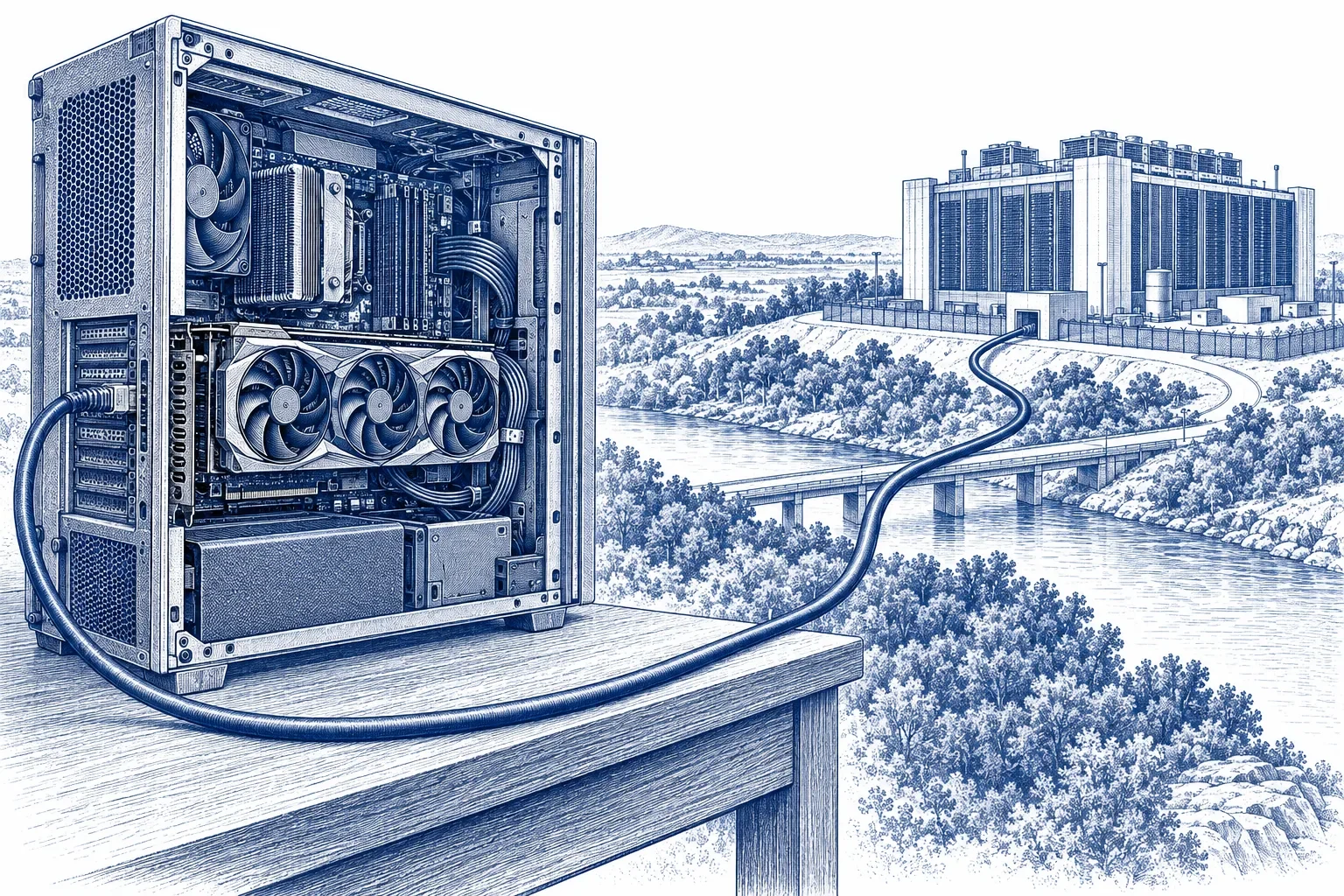
OpenRouter routes requests to hosted model providers; Standard charges 5.5% when you buy credits, with a US$0.80 minimum.1,2,1 Local Ollama is free to use on your own hardware, while Ollama Cloud publishes paid plans starting with Pro at $20 per month.3 The official prices and terms were checked 28 September 2026.1,2,3
TL;DR
- Choose the model and execution location before comparing prices: OpenRouter offers access across providers, while Ollama separates local use from Cloud usage.1,3
- Ollama Cloud subscriptions include token-priced usage credits, so compare the subscription payment with the credits your workload can consume.3
- For parallel Cloud workloads, check concurrency as well as credit allowance: Ollama publishes separate limits for each plan.3
What is the difference between OpenRouter and Ollama?
OpenRouter is a unified API for hosted model providers; Ollama supports running models on your own hardware and offers Ollama Cloud for hosted execution.1,3 The comparison therefore has three choices with different payment and operating responsibilities.1,3
Browse related model infrastructure research.
| Dimension | OpenRouter | Local Ollama | Ollama Cloud |
|---|---|---|---|
| Where inference runs | At the model provider receiving the routed request.1 | On your own hardware.3 | Hosted compute, primarily in the United States; Europe and Singapore may supply extra capacity.3 |
| Published payment model | Model usage deducted from credits, plus the Standard credit-purchase fee.1,2 | Local execution is included in the $0 Free plan.3 | Free access with starter usage; paid subscriptions include credits; every plan can buy more.3 |
| Model access | Standard advertises 500+ models across 80+ providers, including access to frontier models.2,1 | Local model execution; Cloud access has separate credit terms.3 | Starter models on Free; buying usage credits unlocks all Cloud models.3 |
| Constraint to check | Required model, provider price and credit-purchase fee.1 | Test the intended model on the hardware you plan to use. | Required model’s token rates, monthly allowance and concurrency limit.3 |
These are published company prices and terms, following the distinction between source statements and measured results in our research methodology.1,2,3 OpenRouter confirms US-dollar pricing.1 Ollama’s checked pricing page displays $ without an explicit currency label; VAT/GST inclusion is unconfirmed in the checked pages for both services.1,2,3
How much does OpenRouter cost?
OpenRouter Standard publishes a 5.5% credit-purchase fee with a US$0.80 minimum, separate from the model’s inference charge.1,2,1 OpenRouter says it passes through underlying provider prices without an inference markup.1 Budget for both the credits consumed by requests and the fee paid to purchase those credits.1
OpenRouter commonly lists separate prompt and completion prices per million tokens, although some models also charge for requests, images or reasoning tokens.1 A single “OpenRouter token price” would hide those model-specific terms.1 Compare the exact model and provider you intend to use.
The US$0.80 minimum creates a floor under the purchase fee, so small top-ups need particular attention.1 The FAQ separately lists a 5% fee for crypto payments.1
The pricing table lists Business at 8% and says Enterprise fee discounts are available.2 The checked material does not establish the precise charging basis for Business’s 8%; confirm that term before budgeting a Business account.2 Keep the published Standard fee separate from a Business or Enterprise quote.
For the wider billing question, see OpenRouter pricing.
How much does Ollama Cloud cost?
Ollama Cloud publishes Pro at $20 per month with $60 of monthly usage credits, and Max at $100 per month with $300 of monthly usage credits.3 The subscription price buys an allowance valued at Ollama’s model rates; the included credit figure is separate from the cash payment.3
| Ollama plan | Published subscription price | Included Cloud usage | Concurrent Cloud requests |
|---|---|---|---|
| Free | $03 | Starter usage for starter models; amount unspecified on the checked page.3 | 13 |
| Pro | $20/month, or $200/year; the page displays $16.67/month billed annually.3 | $60/month3 | 33 |
| Max | $100/month3 | $300/month3 | 103 |
| Team, early access | $500/month3 | $1,000/month shared across unlimited users.3 | 103 |
| Enterprise | Custom3 | Confirm in the quote. | Confirm in the quote. |
Every plan can buy usage credits, including Free.3 Ollama consumes included plan credits first and then draws from the purchased balance.3 Local use on your own hardware remains unlimited under Ollama’s published usage terms.3
Cloud usage is measured in tokens at each model’s input, cached-input and output rates.3 Selected published rates illustrate the difference between a credit allowance and the amount of model usage it buys.3
| Ollama Cloud model | Input, $/million tokens | Cached input, $/million tokens | Output, $/million tokens |
|---|---|---|---|
| gpt-oss:20b | $0.07 | $0.035 | $0.303 |
| gpt-oss:120b | $0.15 | $0.014 | $0.603 |
| kimi-k3 | $3.00 | $0.30 | $15.003 |
| deepseek-v4.1-flash | $0.30 | $0.006 | $1.203 |
| deepseek-v4.1-flash, off-peak | $0.15 | $0.003 | $0.603 |
Ollama lists off-peak pricing outside the 12:00-18:00 UTC weekday period and all day on weekends.3 Use the applicable model rate, cache treatment and execution time when estimating consumption. A larger subscription credit allowance doesn’t establish which service costs less for the same work.1,3
Where do models run, and what happens to prompts?
OpenRouter forwards requests to model providers, local Ollama runs models on your own hardware, and Ollama Cloud uses hosted compute.1,3 A locally running application can still send requests to a hosted model; identify the inference destination separately from the application’s location.1,3
OpenRouter says it logs basic request metadata such as timestamps, model names and token counts.1 It says prompt and completion content is not logged by default, with opt-in logging available.1 Its FAQ also describes privacy settings that restrict routing to eligible providers.1 Check the selected provider’s policy alongside OpenRouter’s settings.
Ollama says its Cloud models and compute are hosted primarily in the United States, with possible routing to Europe and Singapore for additional capacity.3 It says prompt and response data is never logged or used for training.3 Those statements describe a hosted service’s policy; they do not make Cloud inference local or promise a single hosting country.3
For a workload that must execute on your own hardware, assess local Ollama.3 Evaluate any surrounding application and network connections separately before making a broader privacy claim.
Which models can you access?
OpenRouter advertises a broad hosted catalogue, while Ollama offers local execution and a separately priced Cloud model selection.2,3 OpenRouter’s Standard, Business and Enterprise plans list 500+ models across 80+ providers; its FAQ says the selection includes frontier models from major AI labs.2,1
OpenRouter’s Free tier advertises 25+ free models.2 The FAQ sets a default total limit of 50 free-model requests per day, rising to 1,000 if you have purchased at least 10 credits.1 Free access therefore needs a separate capacity check from paid-model access.1
Ollama’s Cloud pricing table includes gpt-oss:20b, gpt-oss:120b, kimi-k3 and deepseek-v4.1-flash among its listed models.3 Ollama describes its hosted catalogue as open models, and buying usage credits unlocks all Cloud models under its published terms.3 A Cloud pricing entry establishes hosted access; check local availability and hardware fit separately before choosing local Ollama.3
Start with the exact model you need. Check its available execution mode and required features before comparing payment plans.
Which should you choose for your workload?
Glamdring Research recommends choosing the execution location before comparing OpenRouter and Ollama on price: OpenRouter routes to hosted providers, while Ollama offers both own-hardware use and Cloud execution.1,3 The relevant cost comparison then depends on model rates, credit terms and the work you intend to run.1,3
Choose OpenRouter when the priority is accessing models from multiple providers through a unified API and billing system.1 Check the required model’s terms and include the credit-purchase fee in your budget.1
Choose local Ollama when executing on your own hardware is the requirement.3 Test the model with your intended task, context and simultaneous workload. Treat hardware and operating costs as inputs to your own calculation; the $0 software price covers a different boundary.3 For that next question, read what controls AI inference cost.
Consider Ollama Cloud when its listed models match your work and a subscription’s included credits fit your recurring usage.3 Check concurrency before choosing the tier: Pro’s allowance and its simultaneous-request limit are separate constraints.3
For a cloud-to-cloud decision, estimate the same input, cached-input and output workload at each service’s applicable rates. Include OpenRouter’s purchase fee and Ollama’s subscription payment, then account for any extra credits required.1,3 Change the choice if the required model, actual monthly consumption or concurrency requirement changes.
Frequently asked questions
Do Ollama Cloud credits roll over?
Unused included usage does not roll over; Ollama refreshes the included amount at each monthly reset.3 Pro, Max and Team reset on the monthly anniversary of the subscription start date, including annual plans.3 The checked rollover answer concerns included usage, so confirm purchased-credit expiry separately.3
What happens when Ollama Cloud requests exceed the concurrency limit?
Ollama queues requests beyond the plan’s concurrency limit and processes them when a slot becomes available.3 The queue has a fixed limit; when it is full, requests are rejected until a concurrency slot opens.3 Check your peak simultaneous workload as well as expected token consumption.
Does bringing your own provider key remove OpenRouter fees?
OpenRouter’s bring-your-own-key arrangement has a fee-free allowance, followed by a fee on usage above it.1 Pay-as-you-go includes US$25,000 per month of list-price inference with no BYOK fee; the FAQ lists US$200,000 for Enterprise.1 Above the allowance, OpenRouter charges 5% of what the same model and provider would normally cost on OpenRouter.1 The allowance removes the OpenRouter BYOK fee within its scope; it does not supply free inference from the underlying provider.1
Sources checked
Company-owned pages establish what a company says. They do not prove a market conclusion. Each source is dated so readers can judge each claim.